


Exploring Self-Determination and Colonial Legacies in Morocco: A Super Brief Temporal and Spatial Analysis

Guided by "Black Feminist Survival" and "Frantz Fanon", my exploration of Morocco enhanced my understanding of self-determination and colonial legacies, fueling my advocacy for marginalized communities. I examine Henri Prost’s urban planning in Rabat and its lasting colonial impacts. My study abroad goals emphasize Blackness/ Anti-Blackness in Morocco, especially concerning education and identity. This research underscores the importance of decolonization to reclaim memory and reshape social landscapes, resonating with Audre Lorde's call for transformative change.

As a scholar engaged in the exploration of self-determination, I find myself reflecting on my recent experiences in various spaces that seem to have been orchestrated with intentionality, perhaps even divine design. This perspective is particularly pronounced during my travels to Morocco, which followed an enriching academic journey that began with a course in the Fall of 2025 titled Black Feminist Survival. This course provided me with a foundational understanding of the historical and contemporary struggles faced by Black women, emphasizing the importance of resilience, community, and the reclamation of agency in the face of systemic oppression. Subsequently, in the Spring of 2026, I delved into the works of the profound thinker Frantz Fanon, whose writings on colonialism, identity, and liberation have significantly influenced my understanding of self-determination and the intricate dynamics of power and resistance. The intersection of these two academic experiences has not only enriched my intellectual framework but has also ignited a fervent desire within me to evolve beyond the confines of my current professional endeavors. I recognize that my journey into policy is still in its nascent stages; I am, after all, just beginning to navigate this complex field. However, I feel a compelling sense of purpose guiding me, one that has emerged through a blend of intuition and personal experience rather than traditional pathways of learning. As I embark on this path, I invite you to accompany me as I traverse the unique crossroads where the somatic weight of my identity converges with Morocco’s multifaceted geography and culture.

This journey, now that I look back and process, is much more than physical travel; it is an exploration of how my identity, shaped by my academic pursuits and personal history, interacts with the diverse realities of a country steeped in rich traditions yet grappling with modern challenges. In Morocco, I intended to immerse myself in local culture, engage with community leaders, and understand the lived experiences of those navigating the complexities of self-determination in their own contexts. This engagement will be crucial as I seek to connect theoretical frameworks learned in the classroom with the practical realities faced by individuals and communities. Through this process, I have indeed gained insights that will inform my understanding of policy-making and the ways in which it can be shaped to empower marginalized voices. Ultimately, I have come to believe that this journey contributes to my personal growth and also enhances my capacity to advocate for policies that promote equity, justice, and self-determination for all. It is with this vision that I step into the vibrant history of Morocco, eager to learn, to listen, and to contribute to the ongoing dialogues surrounding identity, empowerment, and liberation.

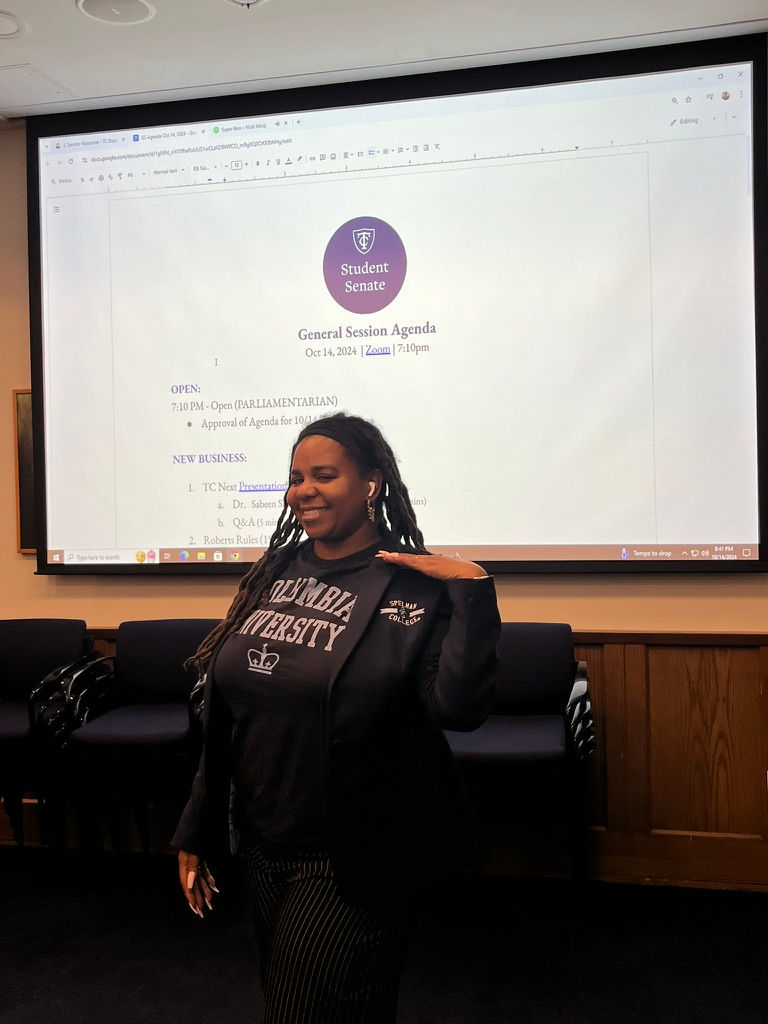
Thinking back on my entry point into the Philosophy and Education program at Teachers College Columbia University, I vividly recall the conversations that shaped my journey. I was informed that I seemed to possess a significant amount of experience in education; however, there was a suggestion made to me that I should pursue the Master’s degree while exploring how to effectively balance the dynamic roles of motherhood, caretaker, secret entrepreneur, and educator alongside my studies. This advice, while well-intentioned, was tinged with an undercurrent of doubt regarding my ability to manage these diverse responsibilities. Reflecting on this, I was reminded of an earlier experience with my supervisor, who, despite my consistent performance and dedication, attempted to suppress my professional growth. She recommended that my tenure be extended without any legitimate grounds for such a recommendation, which felt more like a projection of her insecurities rather than an accurate assessment of my capabilities. In response to these challenges, I embraced my resilience and determination, much like a weed that thrives in adverse conditions. I broke through the confines of others’ insecurities, projections, and limitations, refusing to be boxed in by their perceptions of what I could or could not achieve. I took the extension begrudgingly, fully aware of the implications it carried, and unbeknownst to my supervisor, I would later embrace the acceptance into the Master’s program with the same spirit of defiance and fortitude.

If you know my story, you would understand that I completed my second Master’s degree in a remarkable total of just 20 months. This accomplishment is particularly noteworthy considering that I achieved it while simultaneously standing on the frontlines of battling toxic workplace harassment working in my full-time job. This experience has only reinforced my understanding of resilience and the power of perseverance. I have learned that challenges can serve as catalysts for growth, and I have become accustomed to facing adversities, where weapons may form against me but ultimately never prosper. I owe a deep sense of gratitude to my Ancestors and God for their protection and guidance throughout this journey. Their influence has been a constant source of strength, enabling me to navigate through the complexities of my life with grace and determination. As I continue to forge my path in education and beyond, I carry with me the lessons learned from both my struggles and triumphs, ever mindful of the importance of self-defined resilience in the face of adversity.

Oh yeah and now I am entering my third year as a PhD student in the same program!
How does this tangent connect to my experience in Morocco? Well, it connects through my actual voyage. A voyage is a long journey, especially by ship across the sea, or through air and space. It often implies a significant passage of time, distance, and personal or physical discovery. Getting to Morocco was a thing of great mental, physical, emotional, and psychological exertion. I was embarking on this trip after an intense academic school year for my scholarly ambitions as well as my career commitments. Nevertheless, I knew this trip was for me. I deserved an experience like this to synthesize and marry my praxis, a full-time educator and doctoral scholar. As I have mentioned in my previous blog, I had my first stop in Paris, France. Having the opportunity to cleanse my social palette of New York City, USA, and fine-tune it to the somatic experience of Paris, France was reviving. Switching from the loud pace of New York City to the calm body feeling of Paris is a great reset. Paris lets you slow down and notice how you move and breathe. But also, Paris, France is the primary aesthetic, if you will, that still shadows Morocco, beloved Maroc.

During the French protectorate era, which spanned from 1912 to 1956, a significant transformation took place in Moroccan cities, as French architects, many of whom received their training at the prestigious École des Beaux-Arts in Paris, began to apply their innovative urban design principles. These architects approached Moroccan cities as a vibrant canvas, utilizing their skills to blend French architectural styles with local traditions, creating a distinctive and striking dual identity that continues to define the country’s landscape even today. This unique architectural fusion reflects a complex interplay between colonial influence and indigenous culture, resulting in urban spaces that are rich in history and layered with meaning. So, is it a coincidence that a scholar with an interest in death curricula finds herself back in Paris on July 15, the day immediately following Bastille Day, which is celebrated on July 14? This day marks France's official national holiday, commemorating the storming of the Bastille prison in 1789 and heralding the beginning of the French Revolution. The significance of this timing deepens when one considers that she also found herself in Rabat, Morocco, on July 16, the death anniversary of the colonial French architect and urban planner, Henri Prost. Bastille Day serves as a powerful symbol of the physical destruction of a state apparatus, representing a pivotal moment in history where a violent and chaotic rupture led to the demise of one social contract and the birth of another, radically different one. By arriving in Paris on July 15, this said scholar navigated through a cityscape that was simultaneously celebrating and reflecting on the aftermath of national choreography, a moment marked by the visceral celebration of a historic death, transitioning back into the neat, institutionalized reality of daily life.

This juxtaposition highlights the complexities of memory and commemoration in urban spaces, illustrating how societies grapple with their pasts while moving forward. Yet, it is now the year 2026. Prost, as a figure in this historical narrative, was far more than just an architect; he was a master of systemic containment and urban planning. His framework for the Ville Nouvelle was explicitly designed not just to accommodate modern needs but to effectively freeze the ancient Moroccan medinas in both time and space. This approach raised significant questions about the preservation of cultural identity in the face of modernization and colonial influence. Prost’s work exemplifies the tension between progress and preservation, a theme that resonates in contemporary discussions about urban development and cultural heritage. His legacy, therefore, is not only visible in the physical structures and layouts of Moroccan cities but also in the ongoing dialogue about how societies remember and respond to their historical narratives, particularly those intertwined with colonial legacies. As I reflect on these themes during my travels, I become acutely aware of the layers of meaning embedded in the urban landscapes around me, where the past and present continually intersect and inform one another.

Hopefully, by now you see why my spatial and temporal sensitivities picked up on some things while I was navigating in these environments. For a scholar of death curriculums, this is my masterclass in how empires design, bury, and resurrect social order through stone and space. The intricate relationship between physical environments and socio-political structures isn't coincidental; it is a deliberate act of power that shapes the lived experiences of individuals and communities. So, briefly looking at Prost’s work in Rabat, we see urban zoning through a death curriculum decolonial framework, which provides critical insights into the mechanisms of control embedded in urban design.

In this analysis, we observe that the physical divide between Rabat's Medina and Ville Nouvelle serves as a stark representation of a designed landscape of colonial control, a divide that continues to influence and determine how wealth, power, and human bodies navigate and interact within these spaces today. This juxtaposition of the historical Medina with the modern Ville Nouvelle is not just an architectural contrast; it is a reflection of the colonial legacy that persists in contemporary urban life. The Medina, with its winding alleys and traditional souks (markets), stands in contrast to the wide boulevards and modernist buildings of the Ville Nouvelle, which were constructed to cater to the colonial elite and their interests. Colonial urban planning and a death curriculum directly intersect with self-determination because they reveal how a state uses physical architecture to systematically deny a population its political, cultural, and bodily sovereignty. By examining the spatial arrangements, we can uncover the underlying ideologies that have shaped these urban landscapes. The design choices made in the construction of these areas are not neutral; they are imbued with power dynamics that prioritize certain groups over others, effectively marginalizing those who do not fit within the prescribed social order.

Furthermore, the implications of this spatial division extend beyond geography; they impact social relations, economic opportunities, and cultural expressions. The Medina, often viewed as a relic of the past, is frequently relegated to a tourist attraction, while the Ville Nouvelle is celebrated for its modernity and progress. This dichotomy reinforces a narrative that valorizes colonial legacies while simultaneously erasing the histories and contributions of the indigenous populations. In this context, Prost's work is invaluable as it invites us to critically engage with the urban fabric of Rabat and to question the narratives that have been constructed around these spaces. It challenges us to consider how urban spaces can be reimagined and reclaimed in ways that honor the histories of those who have been historically marginalized. The death curriculum, then, becomes a tool for understanding not only the past but also the potential for future resistance and reconfiguration of social order through conscious design and community engagement. By recognizing the interplay between space and power, we can begin to envision a more equitable urban future that acknowledges and celebrates the diversity of its inhabitants.

Self-determination is the fundamental right of a people to shape their own future, govern their own territory, and define their own identity. This concept is central to understanding the dynamics of power, autonomy, and cultural expression in a world where many communities have struggled against colonial and imperial forces. Henri Prost’s urban engineering in Rabat was explicitly designed to undermine that right by using stone, zoning laws, and geography as mechanisms of permanent submission. Through his strategic planning, Prost aimed to create a physical and social landscape that would reinforce colonial authority and diminish the potential for local governance and self-identity. Here I am as a transnational Black feminist in an African country with a very complex history and landscape. My presence in this context is not just a small matter of personal identity; it is also a reflection of the intertwined narratives of race, gender, and colonial legacy that shape our collective experience.
By dividing Rabat into the Ville Nouvelle and the Medina, Prost separated races; he fragmented the social cohesion necessary for anti-colonial resistance, creating a spatial division that mirrored existing social hierarchies. The Ville Nouvelle, characterized by its modernist architecture and European-style planning, was designed to cater to the needs of the colonial elite, while the Medina, with its narrow streets and traditional structures, was relegated to the local populace, often marginalized and stripped of resources. This deliberate segregation served to paralyze the people in a way, though not completely and totally. While Prost's design aimed to stifle collective action and foster a sense of disconnection among the inhabitants, it also inadvertently created spaces for resilience and resistance. The Medina, rich in cultural heritage and communal ties, became a site of identity reclamation and grassroots mobilization. The very divisions that Prost intended to enforce opened up avenues for solidarity among those who opposed colonial rule. In this light, the urban landscape of Rabat is not just a backdrop but a dynamic participant in the ongoing struggle for self-determination, where the echoes of the past continue to inform the present and future aspirations of its people. Thus, the legacy of Prost’s urban planning can be reimagined as a both: one of oppression but also one of resistance, as the people of Rabat navigate their complex historical landscape, asserting their right to define their identity, reclaim their space, and shape their destiny in the face of enduring challenges. The interplay between the architectural divisions and the social fabric of the city exemplifies the ongoing dialogue between colonial legacies and contemporary movements for justice and equality.
As a Black woman hailing from America, specifically the vibrant and culturally rich New York City, I find it essential to engage in a deep analysis of my positionality. This analysis is particularly crucial when juxtaposed against the myriad scenes and narratives that unfold before me throughout various spaces and times. The interplay of identity, history, and context shapes my understanding of the world and my place within it. This brings me to the profound assertion that discussions of death must invariably be intertwined with themes of liberation and sustainability. Such an assertion is more than academic folly; it is rooted in lived experiences and historical realities that demand our attention and reflection. My decision to commence this writing with a reference to Frantz Fanon is deliberate and significant. In the opening chapter of his seminal 1961 text, The Wretched of the Earth, Fanon articulates a powerful critique of colonialism, framing it as a system characterized by strict physical and psychological spatial compartmentalization. This notion of compartmentalization is a lived reality for many individuals and communities who have been marginalized and oppressed throughout history. Fanon’s insights urge us to consider how colonial legacies continue to shape contemporary struggles for justice and equity. Reflecting on my own educational journey, I recall the initial sessions of the course titled Education, Refugee and Migration Policies and Practices in Morocco.

During one of our online classes conducted over Zoom, I felt an overwhelming urge to share a powerful image that has become emblematic of the historical exploitation of African nations—the Scramble for Africa. This image, which vividly depicts the arbitrary division of the continent among colonial powers, immediately sprang to mind when I encountered the course title. It encapsulates a critical moment in history that has had lasting implications for education, migration, and the lived experiences of countless individuals. By sharing this image, I aimed to highlight the connections between past injustices and present realities, particularly in the context of Morocco, a nation that has its own complex history with migration and colonialism. The Scramble for Africa serves as a stark reminder of the violent disruptions caused by colonial endeavors, which have led to ongoing challenges in education and social policies for refugees and migrants today. This historical lens is vital as we seek to understand the multifaceted nature of displacement, identity, and the quest for liberation in a world that often seeks to compartmentalize and marginalize. My positionality as a Black woman from New York City, right now in its manifestations of time and space, informs my perspective on these critical issues. It compels me to engage in a dialogue that recognizes the interconnectedness of death, liberation, and sustainability. As we navigate the complexities of education and migration policies within various cultural contexts, we must remain aware of the historical legacies that shape our present circumstances. Only through such awareness can we hope to foster genuine understanding and promote meaningful change in the pursuit of justice and equity for all.

I am not sure if I want to help by being critical. I find myself grappling with the question of whether or not I should take on the role of a critical observer and contributor to discussions surrounding social issues. This hesitation is woven into the very fabric of my identity, which encompasses multiple facets: as a Black woman, as a practicing Baptist Christian (which often brings a unique perspective to the table, even if it elicits a chuckle and a grimace from time to time, I also grew up In a family with people practicing Islam and this blending of the faiths for me Is evident In how I look at the world, thats anither story and sidebar though), and as someone who proudly hails from the vibrant borough of Queens in New York City. Each of these identities shapes my worldview and informs my understanding of the complexities of societal structures. My experiences navigating the diverse streets of New York have endowed me with a certain street wisdom, allowing me to glean insights from the people and environments around me, ultimately shaping my perspectives on justice and equality. When Prost established his cordon sanitaire, he created a physical barrier, and he effectively locked the Rabat Medina into a state of overcrowding and systemic neglect, a situation that was exacerbated by a lack of adequate funding and resources. This deliberate act of segregation was not just a logistical decision; it was a calculated maneuver that resulted in a structural stasis, one that left the local population trapped in a cycle of poverty and limited opportunity. Prost again was simultaneously constructing a spacious and modern Ville Nouvelle that catered specifically to the needs and comforts of European settlers. This can not be said enough in this essay. This stark contrast between the two areas was emblematic of the broader colonial mindset, where the colonized were not only marginalized but also made to feel inferior in their own land. The city layout was intentionally crafted to reinforce feelings of inferiority among the colonized population. As they walked through the streets of the Ville Nouvelle, they were constantly reminded of their subordinate status, both socially and economically. The architectural choices, the allocation of public spaces, and even the aesthetic considerations were all designed to create a sense of exclusion. In this way, Prost's urban planning was about the physical arrangement of buildings and streets, as well as being a profound statement about power dynamics and the lived experiences of those who found themselves on the margins of the society he was shaping.

This reality echoes the observations made by Frantz Fanon, who articulated the psychological and social ramifications of colonialism, highlighting how such spatial inequalities contribute to a broader sense of alienation and disenfranchisement among colonized peoples. In reflecting on these historical injustices, I am reminded of the importance of critical engagement with our surroundings and the systems that govern them. It is through this lens that I consider my role, not just as an observer but as an active participant in the discourse surrounding social justice. The intersections of my identity compel me to speak out... Against inequalities, and to advocate for those who may not have a voice, and to confront the legacies of colonialism that continue to shape our urban landscapes today. This practice is more than an academic exercise; it is my personal mission that resonates with my experiences and my understanding of community dynamics in places like Queens and beyond.

I find myself in complete agreement with the profound insights of Frantz Fanon, as well as my recollections of poignant lines from James Baldwin, both of whom meticulously analyze colonialism as a political and economic system, and as a visceral, somatic experience. This concept emphasizes that colonialism is a tangible system that inflicts deep psychological and physical trauma directly onto the human body. The scars of colonialism are etched into the very fabric of our being, manifesting in both overt and subtle ways. This is precisely why my body instinctively sensed that something was profoundly amiss as I traversed through various places and times, each infused with its own historical weight and emotional resonance. The act of self-determination is inherently linked to the fundamental freedom of bodily movement and the ability to gather collectively with others who share similar aspirations and struggles. In this context, the tactical street grids and buffer zones designed by colonial powers, such as those articulated by Prost, were more than mere urban planning strategies; they were insidious mechanisms intended to limit and police the physical movements of local populations. By confining the indigenous community to designated areas like the Medina, the colonial state effectively seized complete control over their physical space, thereby stripping them of their autonomy and agency. This spatial confinement was not just a matter of geography but a profound assault on identity and community cohesion. Looking deeper into Fanon's analysis, he elucidates how living in an architecturally segregated environment compels the colonized individuals to internalize the settler's gaze. This internalization creates a profound sense of self-alienation and an identity crisis that permeates every aspect of life. When one's daily environment is a constant reminder of exclusion from modern, thriving spaces—spaces that symbolize progress, opportunity, and belonging—the psychological capacity to envision, aspire to, and actively fight for self-determination is systematically suppressed. The oppressive architecture of colonialism confines bodies while also constraining minds, limiting the horizons of possibility and stifling the spirit of resistance. The struggle for liberation, therefore, is effectively a political battle and a deeply personal journey towards reclaiming one's identity, agency, and the right to exist freely within one's own body and community.

I came into this study abroad trip with the query of tracking Blackness in Morocco as it relates to identity and Blackness globally. I intended to delve deeply into the multifaceted aspects of education, migration, and language within the Moroccan context, which is uniquely situated at the crossroads of Africa, Europe, and the Middle East. This geographical positioning influences Morocco's cultural and historical narratives while shaping pressing questions surrounding migration, identity formation, schooling systems, and the sense of belonging among its diverse population. I am particularly interested in examining how Moroccan schools and local communities navigate the complexities of multilingualism, especially in relation to the interplay between Arabic, Amazigh languages, French, English, and the various languages spoken by migrant and refugee communities that have sought refuge or opportunity within Morocco's borders. Through this exploration, I still aim to uncover how language serves as a crucial determinant of access, power dynamics, cultural expression, and educational opportunities, ultimately influencing the lives of individuals and communities in profound ways.
As I reflect on my experiences and observations, I find myself grappling with increasingly complex questions. I wonder whether a newly independent nation, like Morocco, can genuinely thrive and develop while still existing within the oppressive spatial footprints and legacies left behind by colonial architects such as Henri Prost. The notion of true liberation extends beyond political independence; it necessitates a comprehensive decolonization of the mind, a reclamation of collective memory, and a radical redesign of the physical and social landscapes of the city itself. However, in this moment, I am acutely aware of my status as a Stranger in the Village, nod to James Baldwin, navigating a space that is both foreign and familiar. I am part of a lineage of Black intellectual outsiders who traverse different cultural terrains to gain a clearer understanding of the intricate contours of global white supremacy, imperialism, and the dislocation that often accompanies our identities. This perspective, as a Black stranger, enables me to perceive how Prost's imposing physical structures, the language barriers that exist within educational institutions, and the stringent border policies that confine West African migrants are all interwoven elements of a singular oppressive system. It is as if this system is a relentless machine, grinding individuals down and perpetuating cycles of exclusion and marginalization. My journey involves tracking the remnants of an empire's blueprint, and critically analyzing how a newly independent nation continues to enforce self-regulation and control using the very tools and methodologies of its former colonizers.

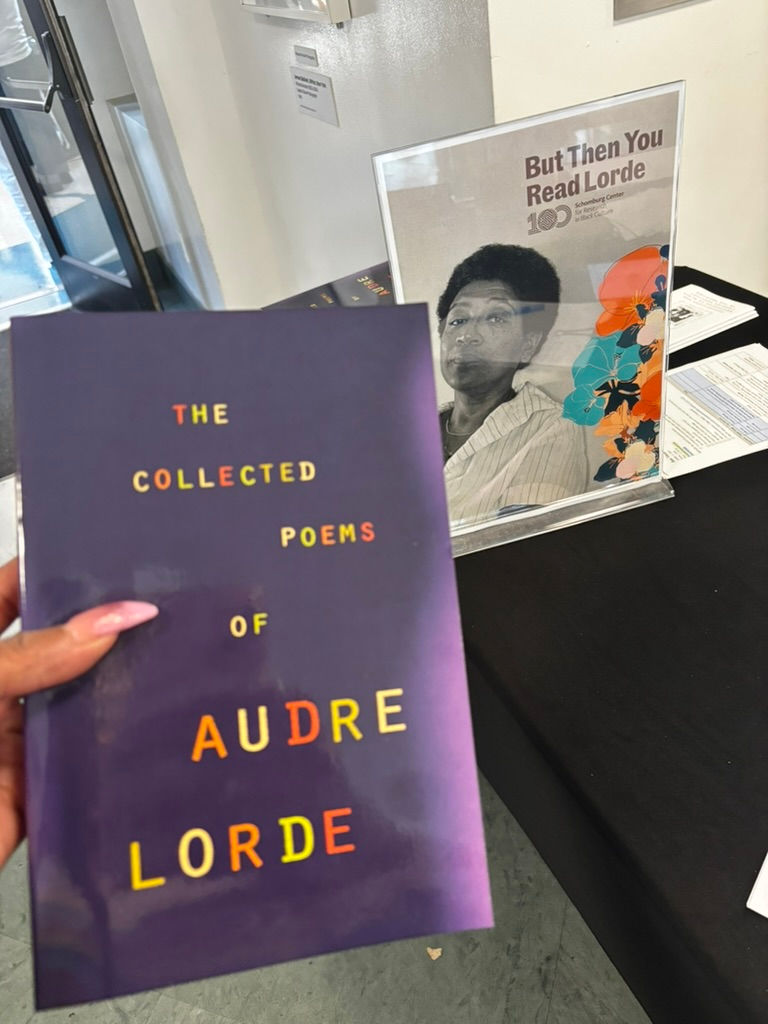
“For the master’s tools will never dismantle the master’s house. They may allow us temporarily to beat him at his own game, but they will never enable us to bring about genuine change" - Audre Lorde, 1979. This quote pairs well with my observations and experiences, serving as a poignant reminder that the frameworks and systems established by colonial powers cannot be relied upon to foster authentic transformation or liberation. Instead, it calls for a critical examination of the ways in which we engage with these inherited structures and encourages a pursuit of innovative strategies that can lead to meaningful change. As I continue processing this journey, I remain committed to interrogating these dynamics and seeking pathways that honor the rich history of identities and experiences that exist within Morocco and beyond.
Thanks for reading and please keep in mind this remains a brief analysis blended with true personal experience.
Works Cited
El Moumni, L. (2025). From colonial tool to a nation-building instrument: The “Service de l'urbanisme” in Morocco. ABE Journal, (25). doi.org
History Hit. (2020, November 24). Mausoleum of Mohammed V. https://www.historyhit.com/locations/mausoleum-of-mohammed-v/
Imane. (2020, August 21). The French colonial legacy in Morocco. Indy Odyssey. https://www.indyodyssey.com/post/the-french-colonial-legacy-in-morocco
Shatz, A. (2025, July 28). Where life is seized – Frantz Fanon revisited. Transcend Media Service. https://www.transcend.org/tms/2025/07/where-life-is-seized-frantz-fanon-revisited/ (Original work published 2024)
Stanford University. (2017, April 11). Stanford historian follows trail of mercenary European adventurers embarking on 'Scramble for Africa'. Stanford News. https://news.stanford.edu/stories/2017/04/stanford-historian-follows-trail-mercenary-european-adventurers-embarking-scramble-africa


Comments